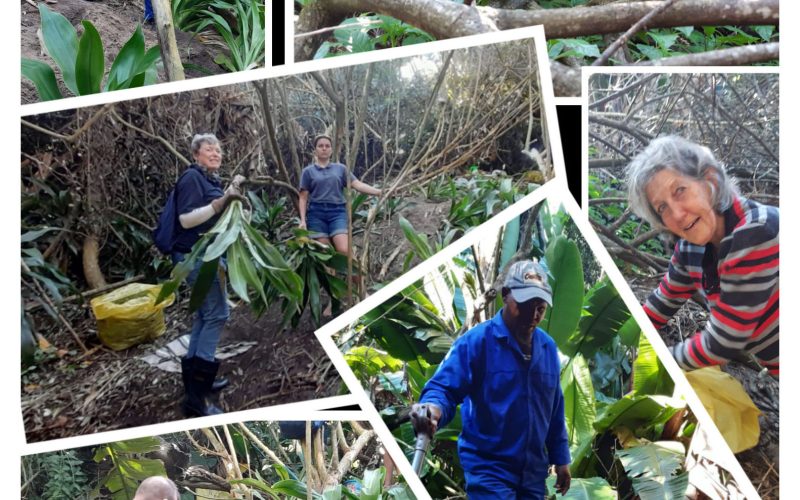
Restoring Biodiversity: The Power of Invasive Plant Removal
Invasive alien plants pose a significant threat to our local coastal ecosystems. By systematically managing and removing these aggressive species, we can trigger a powerful restoration cascade that revitalizes the environment.
Restoration of specialized food sources
Native insects and pollinators have co-evolved with indigenous flora. Removing invasive plants allows native vegetation to return, providing the essential high-quality nectar, pollen, and foliage these species rely on.
Rehabilitation of critical habitats
Invasive plants often create monocultures that smother structural diversity. Removing them allows a complex, multi-tiered habitat to return, which is necessary for nesting, burrowing, and shelter for local wildlife.
Revitalization of the trophic food web
A surge in native insect and bee populations provides an abundant food source for insectivorous fauna, such as birds, reptiles, and small mammals, stabilizing the broader ecosystem.
Restoration of water security
Many invasive trees consume disproportionate amounts of groundwater, drying out surface soils. Clearing them restores natural hydrological balances, bringing vital moisture back to topsoil layers.