Skip to content
Green Coast Initiative

Preserving & Enjoying
Leisure Bay Responsibly

WESSA Green Coast destination

Leisure Bay was recognised as a WESSA Green Coast destination in October 2025 — a mark of responsible coastal stewardship. This unique coastline is divided into two distinct ecological and recreational sections, each offering its own landmarks, pristine environments, and local heritage — from lifeguard-protected swimming beaches to secluded coves and world-class surf.

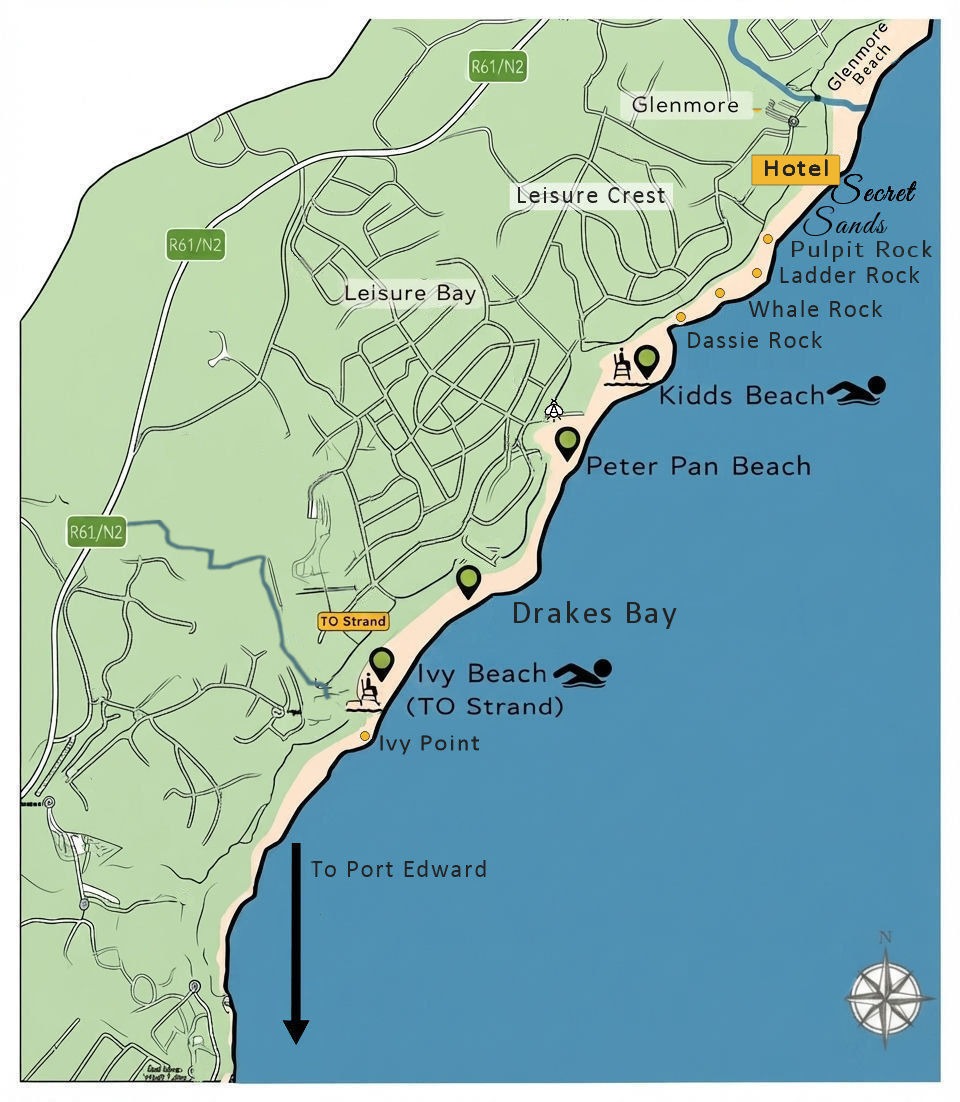
Map of Leisure Bay Conservancy Green Coast beaches from Glenmore to Ivy Point
Green Coast beaches — Glenmore to Ivy Point (TO Strand). Tap map to open full size.
The beaches

Kidds, Peter Pan,
Drakes & Ivy

🏖️
Kidds Beach
One of the South Coast's premier swimming destinations — lifeguard protected on weekends and holidays, backed by old-growth coastal forest.
🌊
Ivy Beach (TO Beach)
A popular swimming beach with a demarcated area protected by lifeguards over weekends and holidays. Ivy Point is a renowned big-wave surf spot.
🧒
Peter Pan Bay
A beautiful shady beach on the far side of a rocky promontory — an ideal sheltered spot for families with small children.
🌿
Drakes Bay
A secluded swimming beach along a sweeping kilometre of sand backed by coastal dune forest, joined to Ivy Point along the shore.
Enjoy the coast responsibly

Help us keep Leisure Bay
green & pristine

Simple ways every visitor and resident can protect our beaches, dunes and sea life. Tap a poster to see it full size.

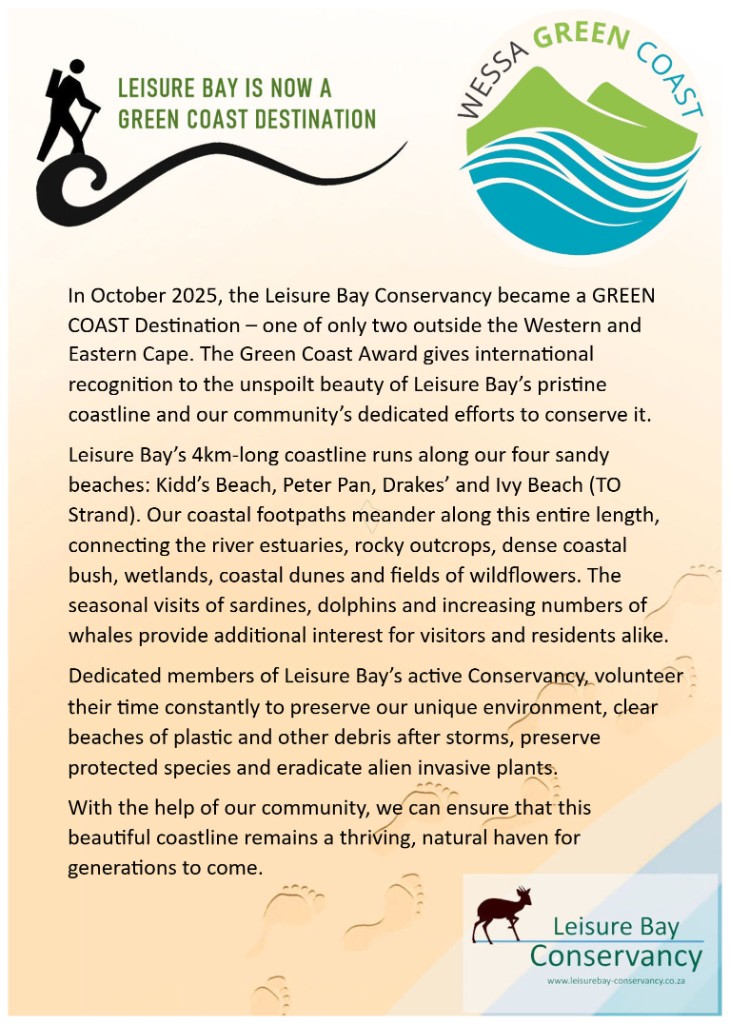
Leisure Bay is now a Green Coast Destination

In October 2025, the Leisure Bay Conservancy became a GREEN COAST Destination – one of only two outside the Western and Eastern Cape. The Green Coast Award gives international recognition to the unspoilt beauty of Leisure Bay’s pristine coastline and our community’s dedicated efforts to conserve it.

Leisure Bay’s 4km-long coastline runs along our four sandy beaches: Kidd’s Beach, Peter Pan, Drakes’ and Ivy Beach (TO Strand). Our coastal footpaths meander along this entire length, connecting the river estuaries, rocky outcrops, dense coastal bush, wetlands, coastal dunes and fields of wildflowers. The seasonal visits of sardines, dolphins and increasing numbers of whales provide additional interest for visitors and residents alike.

Dedicated members of Leisure Bay’s active Conservancy volunteer their time constantly to preserve our unique environment, clear beaches of plastic and other debris after storms, preserve protected species and eradicate alien invasive plants.

With the help of our community, we can ensure that this beautiful coastline remains a thriving, natural haven for generations to come.
Download poster

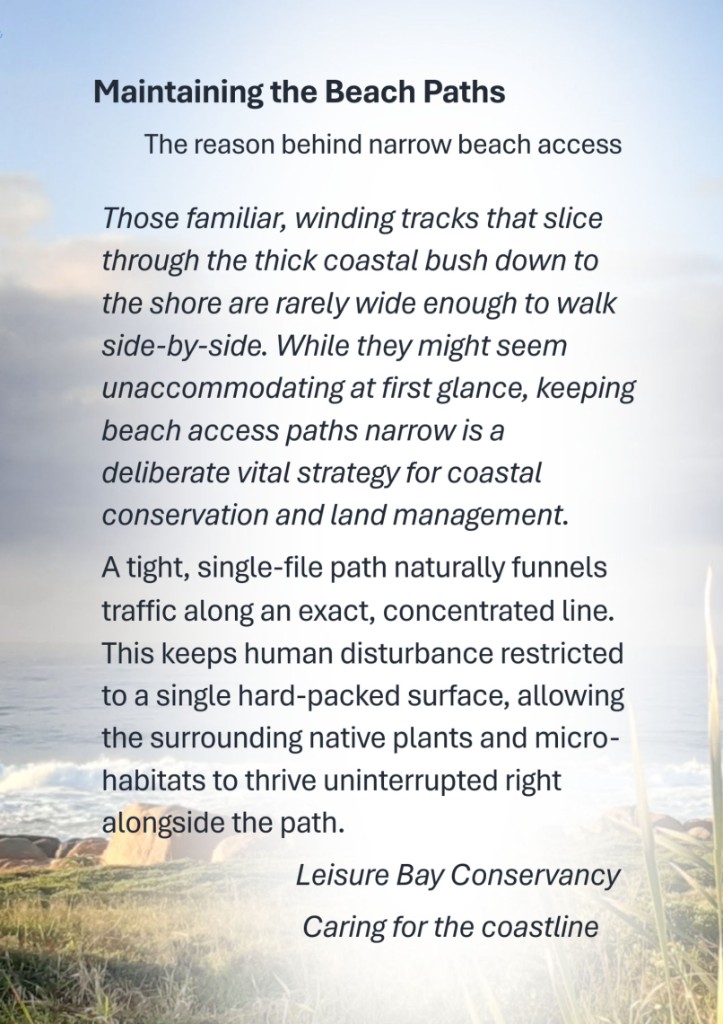
Maintaining the Beach Paths

The reason behind narrow beach access.

Those familiar, winding tracks that slice through the thick coastal bush down to the shore are rarely wide enough to walk side-by-side. While they might seem unaccommodating at first glance, keeping beach access paths narrow is a deliberate, vital strategy for coastal conservation and land management.

A tight, single-file path naturally funnels traffic along an exact, concentrated line. This keeps human disturbance restricted to a single hard-packed surface, allowing the surrounding native plants and micro-habitats to thrive uninterrupted right alongside the path.

Caring for the coastline

Download poster

The Importance of Sand Dunes

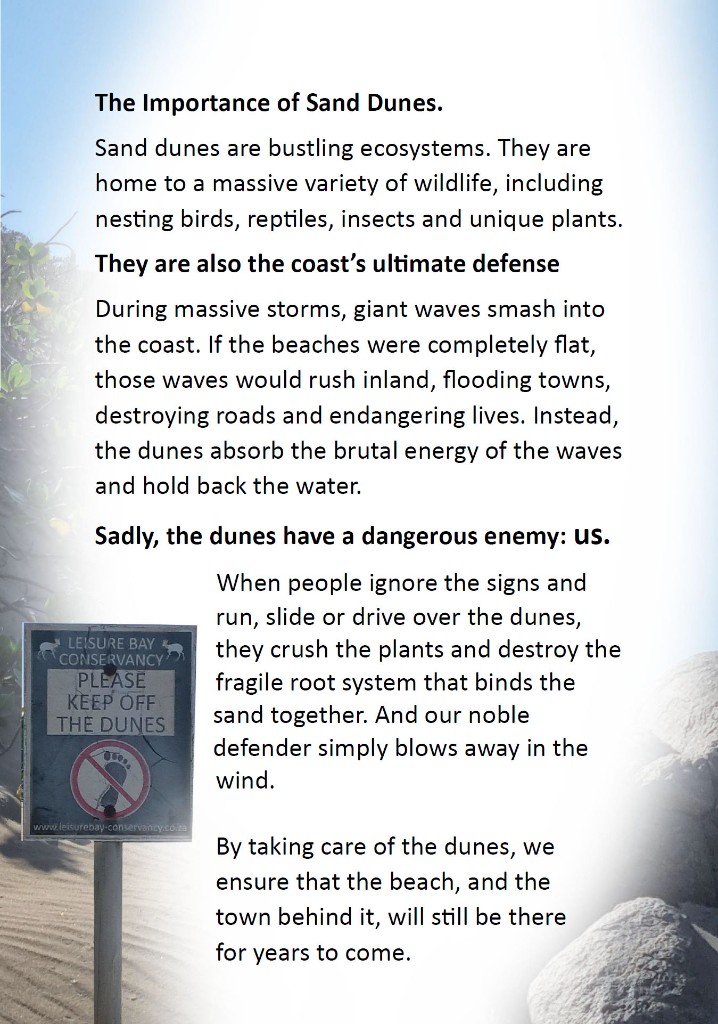
Sand dunes are bustling ecosystems. They are home to a massive variety of wildlife, including nesting birds, reptiles, insects and unique plants.

They are also the coast’s ultimate defence.

During massive storms, giant waves smash into the coast. If the beaches were completely flat, those waves would rush inland, flooding towns, destroying roads and endangering lives. Instead, the dunes absorb the brutal energy of the waves and hold back the water.

Sadly, the dunes have a dangerous enemy: us.

When people ignore the signs and run, slide or drive over the dunes, they crush the plants and destroy the fragile root system that binds the sand together. And our noble defender simply blows away in the wind.

By taking care of the dunes, we ensure that the beach, and the town behind it, will still be there for years to come.

Download poster

Stop the Strangle

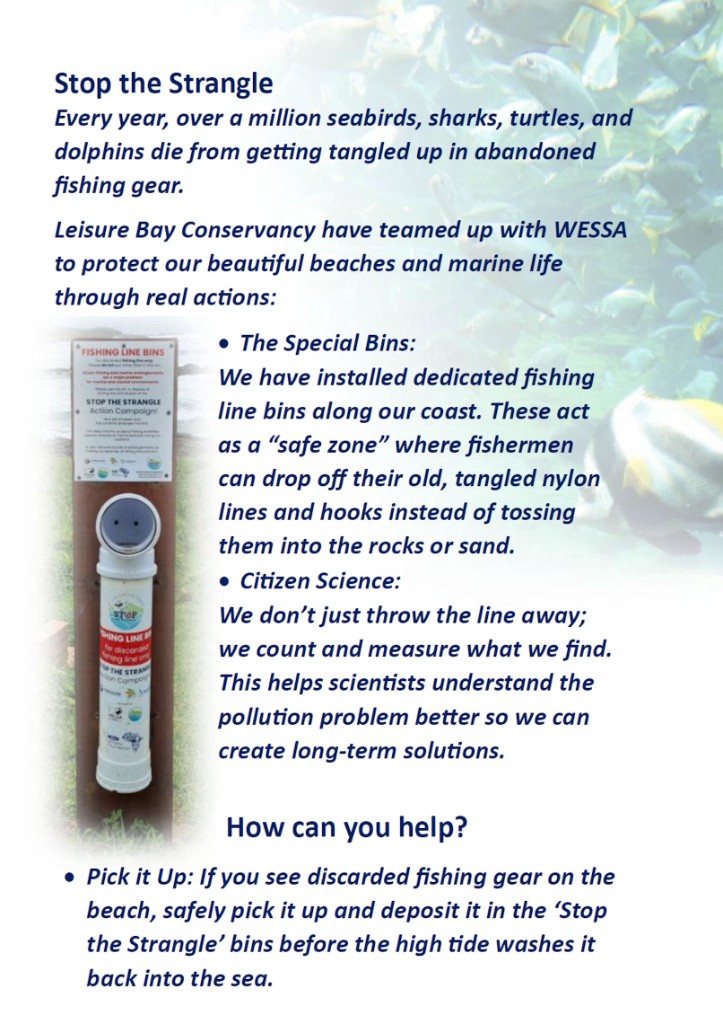
Every year, over a million seabirds, sharks, turtles, and dolphins die from getting tangled up in abandoned fishing gear.

Leisure Bay Conservancy have teamed up with WESSA to protect our beautiful beaches and marine life through real actions:

  • The special bins: We have installed dedicated fishing line bins along our coast. These act as a “safe zone” where fishermen can drop off their old, tangled nylon lines and hooks instead of tossing them into the rocks or sand.
  • Citizen science: We don’t just throw the line away; we count and measure what we find. This helps scientists understand the pollution problem better so we can create long-term solutions.

How can you help?

  • Pick it up: If you see discarded fishing gear on the beach, safely pick it up and deposit it in the ‘Stop the Strangle’ bins before the high tide washes it back into the sea.

Read more: Ghost Gear — Stop the Strangle →

Download poster

Benefits of Beach Cleaning

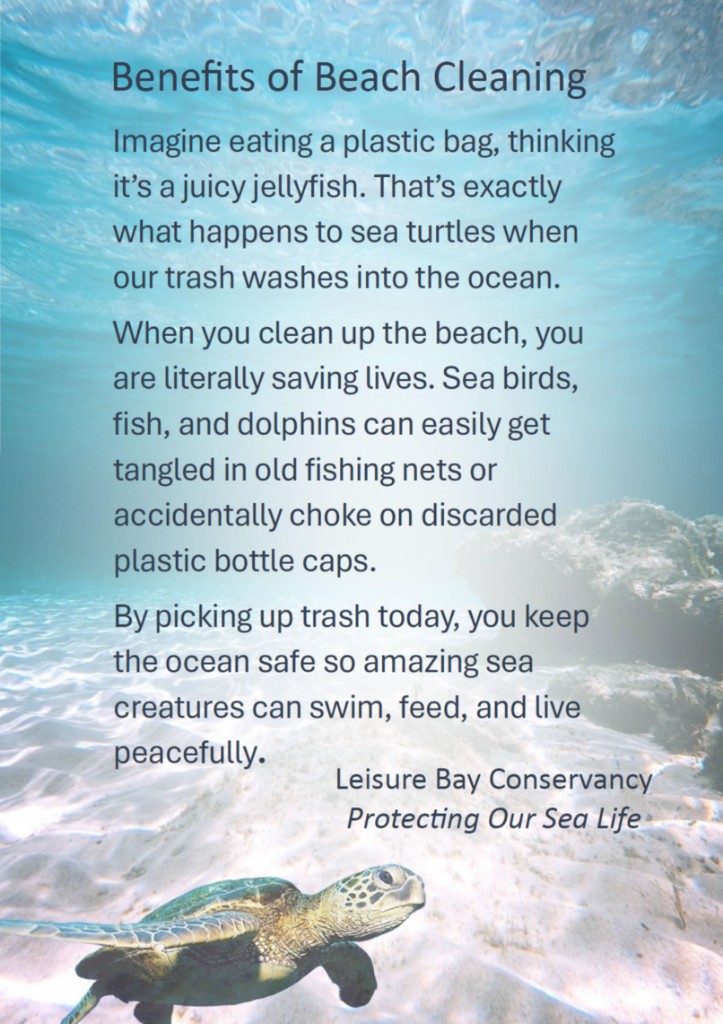
Imagine eating a plastic bag, thinking it’s a juicy jellyfish. That’s exactly what happens to sea turtles when our trash washes into the ocean.

When you clean up the beach, you are literally saving lives. Sea birds, fish, and dolphins can easily get tangled in old fishing nets or accidentally choke on discarded plastic bottle caps.

By picking up trash today, you keep the ocean safe so amazing sea creatures can swim, feed, and live peacefully.

Protecting our sea life

Download poster

Pick Up After Your Dog

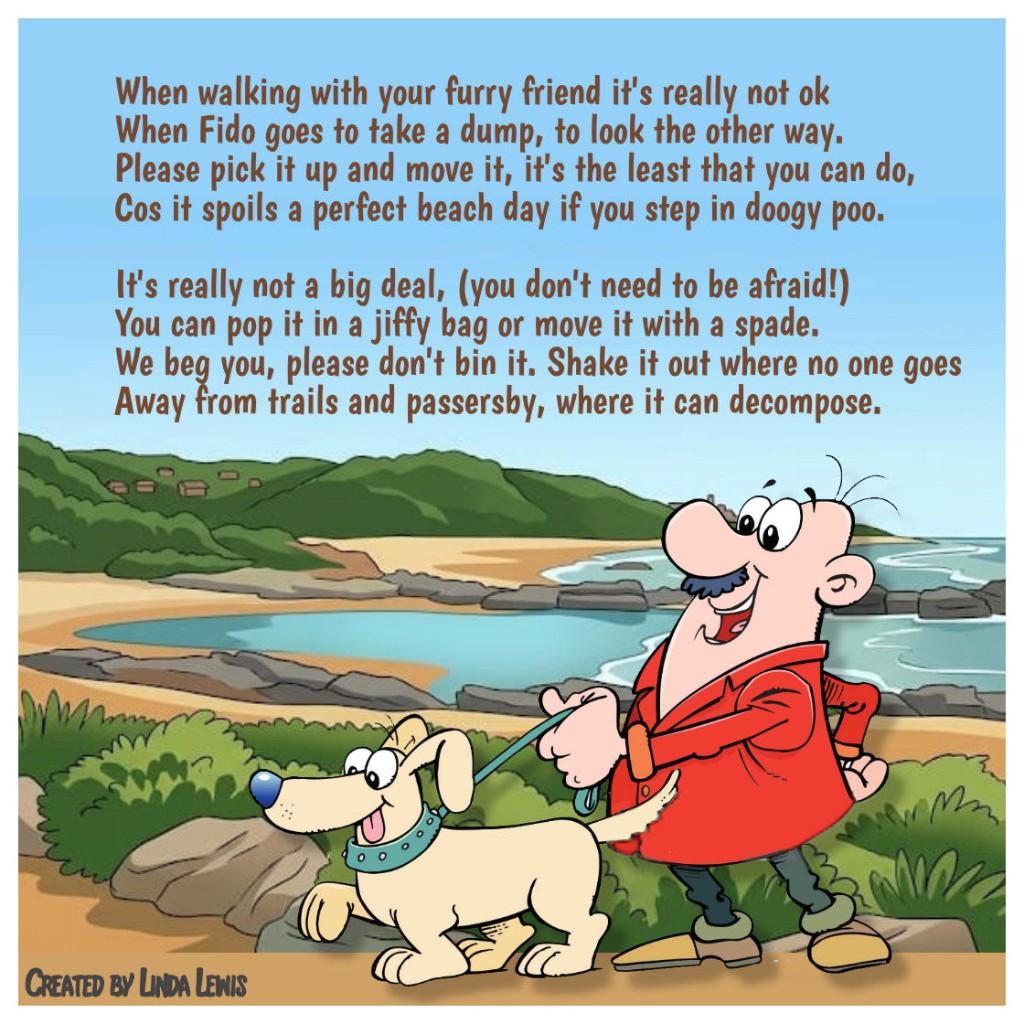
When walking with your furry friend it’s really not ok
When Fido goes to take a dump, to look the other way.
Please pick it up and move it, it’s the least that you can do,
Cos it spoils a perfect beach day if you step in doggy poo.

It’s really not a big deal, (you don’t need to be afraid!)
You can pop it in a jiffy bag or move it with a spade.
We beg you, please don’t bin it. Shake it out where no one goes
Away from trails and passersby, where it can decompose.

Created by Linda Lewis

Download poster